.png)
.svg)

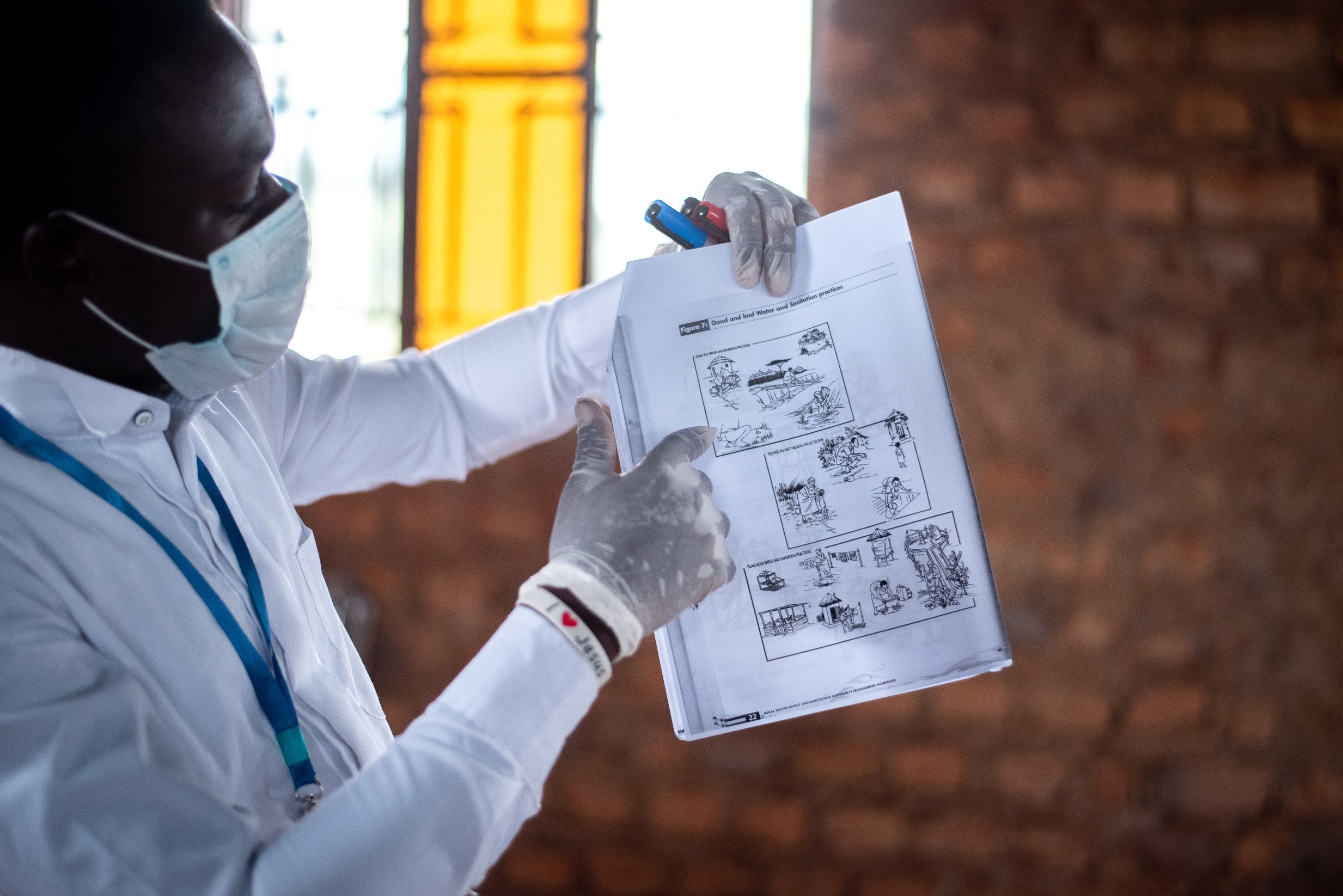
In May 2026, the World Health Organization declared the Ebola outbreak in the Democratic Republic of the Congo and Uganda a Public Health Emergency of International Concern (WHO, 17 May 2026).
The Bundibugyo strain of the virus has now been confirmed in seven people in Uganda, including one death (ECDC, 27 May 2026). There is no vaccine yet for this strain.
What is making a measurable difference is clean water, safe sanitation, and the everyday practice of washing hands.
In Kasese District, where Acts for Water has been working for nearly two years, that infrastructure is doing exactly what it was built to do — protect health. Only now, it is also serving as a critical first line of defence against the spread of disease.
Handwashing with soap is one of the most effective ways to prevent the spread of infectious disease. The World Health Organization estimates it can reduce transmission by up to 70% (WHO).
A tap. A bar of soap. Twenty seconds can change a person's future.
The average Canadian household uses more than 500 litres of water per day (Statistics Canada, 2023). In rural Uganda, the average household uses around 53 litres — for everything (Uganda Bureau of Statistics, 2023). When water has to be carried by hand from a distant stream, washing hands six or seven times a day is a real task.
That is exactly the gap Acts for Water has been closing in Kasese — long before Ebola arrived at its borders.
We don't have to imagine what reliable, treated water does for a community's health. Two voices from our field areas in Uganda tell the story plainly.
A registered midwife at Irimya Health Centre II in Ibanda District watched her facility transform after a tap was connected in 2022. Before then, staff and patients collected water from streams and stagnant dams. Diarrhoeal illness was common. So was trachoma — an eye infection spread when children wash their faces with contaminated water.
"The cases of eye infections are reduced. The cases of diarrhoea decreased. Pregnant mothers had water to wash their clothes. Lactating mothers had water for their babies. We have greatly improved following the introduction of that water that we badly wanted."
She also noted something quieter but just as important: people learned. They learned to wash hands with soap. They learned the link between dirty water and disease. They learned to use toilets properly. And they shared that knowledge with those who couldn't attend the training.
At a primary school in another community, Baluk Mileki described what happened when a new latrine and a fresh tap arrived together:
"Our children are no longer skipping school. They are enjoying the facility. They are no longer suffering from waterborne diseases because the water is well treated."
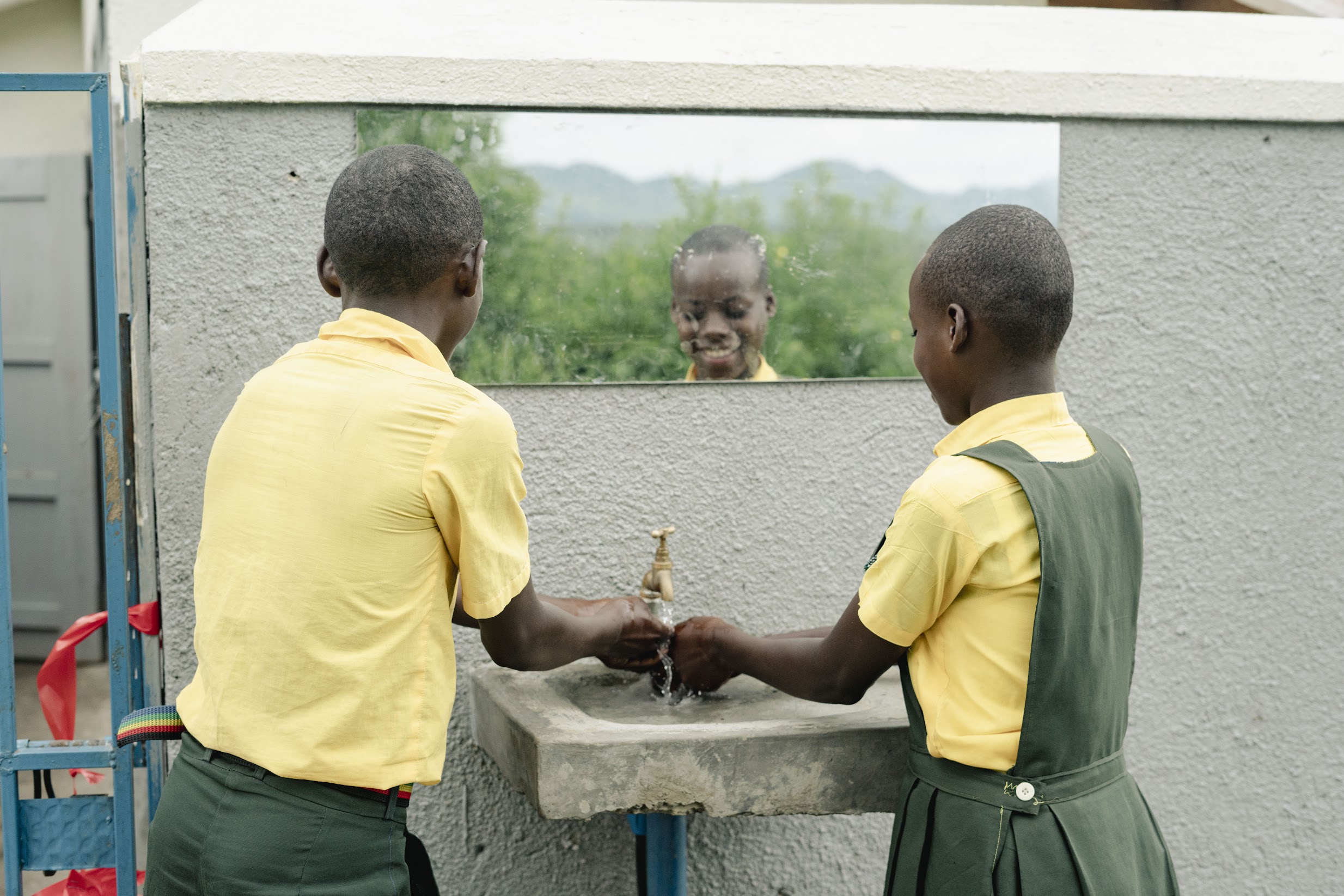
Enrolment at his school grew from 450 students to 520 in the period that followed (Acts for Water field report, 2026). Children began arriving earlier. Sanitation became part of daily life — not as a lecture, but as a habit built around a working tap and a clean toilet block.
What the midwife and Baluk describe — handwashing as routine, clean water from the tap, sanitation knowledge rooted in the community — is exactly what protects a region when an outbreak arrives at its border.
Kasese District sits directly on Uganda's border with the Democratic Republic of the Congo, where the current Ebola outbreak is concentrated in Ituri, North Kivu, and South Kivu provinces (WHO, May 2026). People, goods, and movement cross that border every day.
For nearly two years, our team has been working in vulnerable communities across Kasese to install clean water taps, improve sanitation, and strengthen hygiene practices like handwashing and ending open defecation.
Last year, a clean water system was completed for more than 18,000 people, including 9 schools and 3 healthcare clinics (Acts for Water field report, 2025). These facilities now have reliable running water — essential for infection prevention and safe patient care.
As soon as it is safe to return to Kasese, the team expects to bring clean water to a further 16,881 people, including 9 more schools and 3 more healthcare facilities.
That work was never framed as "Ebola preparedness." It was framed as what it has always been: building the conditions for healthier, more dignified daily life.
But in the context of a Public Health Emergency of International Concern, those taps and toilets are doing something the original project documents never anticipated. They are a frontline defence.
Our team in Uganda continues this work safely in other locations like Ibanda.The communities we work alongside are already practising the hygiene measures that public health officials are now urging across the region — because that work began long before the headlines.
This is what local leadership looks like in a crisis.
This is what your support built.
The midwife in Irimya. The headteacher in Kitooma. The thousands of households in Kasese are now within reach of a tap. They are not waiting for help to arrive. They are already part of the response.
The next phase of work in Kasese is to reach 16,881 more people, 9 more schools, and 3 more healthcare facilities, although the community currently has 34 taps turned on with 8 remaining to complete when the team is able to return to the area. Right now, every household connected is another point of defence. Every school with a tap and a toilet is another generation learning hygiene as routine.
This is the moment your support matters most.
Stand with us to bring this critical work to more communities across Uganda — donate today.
World Health Organization (17 May 2026). Epidemic of Ebola Disease caused by Bundibugyo virus in the Democratic Republic of the Congo and Uganda determined a public health emergency of international concern.
World Health Organization. Hand hygiene for infection prevention and control — handwashing with soap reduces transmission of infectious disease, including Ebola, by up to 70%.
European Centre for Disease Prevention and Control (27 May 2026). Ebola disease outbreak in the Democratic Republic of the Congo and Uganda — situation update.
Statistics Canada (2023). Survey of Drinking Water Plants — residential water use averaged 223 litres per person per day in 2021.
Uganda Bureau of Statistics (2023). 2023 Water Accounts Report — average household water use of 52.8 litres per day in 2022.


