.png)
.svg)

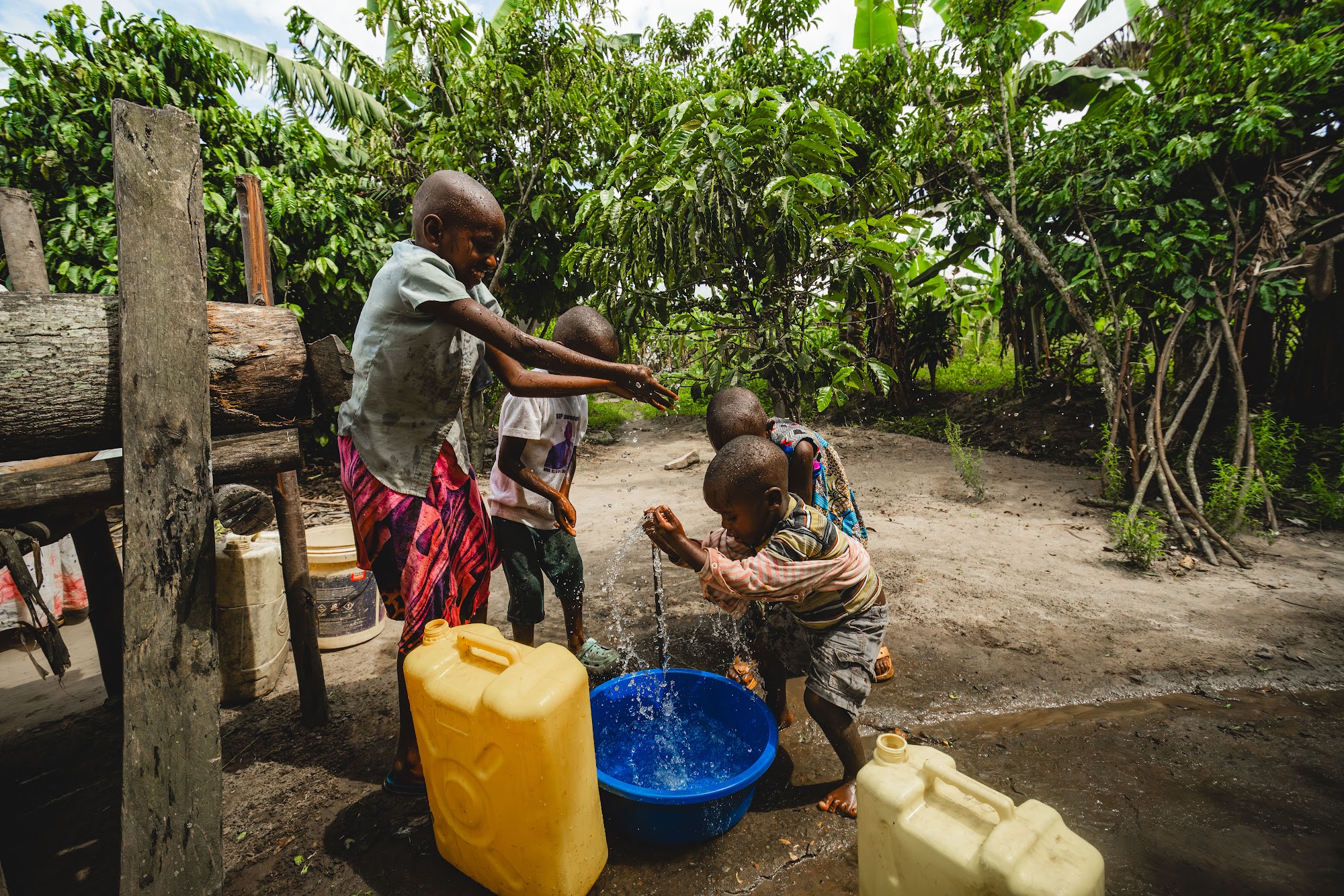
There's a question we ask before any tools go in the ground, before any pipe is measured or any budget is set.
It isn't "what do you need?"
It's "what do you already have?"
That one shift changes everything about how a project unfolds, and it's the starting point of how we work, every time, in partnership with local leaders.
Most development work — including ours — started decades ago by focusing on what was lacking. A needs assessment. A list of what a community lacked: clean water, latrines, income, infrastructure. The community became a collection of problems waiting to be solved by an outside organization with the resources to solve them.
It's well-intentioned. It's also backwards.
That model started by looking at what was missing rather than what was already there. It placed the focus on needs and deficits, rather than the strengths, knowledge, relationships and resources already present within the community. And when we begin with what’s missing, we can miss the very assets that make lasting change possible.
The first step in how we work is Identify Need, but in practice, in partnership with local leaders, that step starts with strengths, not gaps. Before anything is designed, our team sits with a community and maps what's already there:
Bujaga is the clearest proof of what that looks like. When the gravity flow scheme was being built in the early 1990s, the community didn't wait to be given a water system. They identified what they already had to offer, and put it forward.
Vincent Bagirana, who still chairs the Water Management Committee in Kigarama Village today, puts it simply:
"We gave free land where pipes passed and contributed in-kind labour because we saw the project as ours. Residents raise user fees which help us with operation and maintenance. The tap committees do sensitization and protection."

Free land. Volunteer labour. A committee willing to organise residents and collect user fees. None of that shows up on a typical needs list, but it became the foundation everything else was built on.
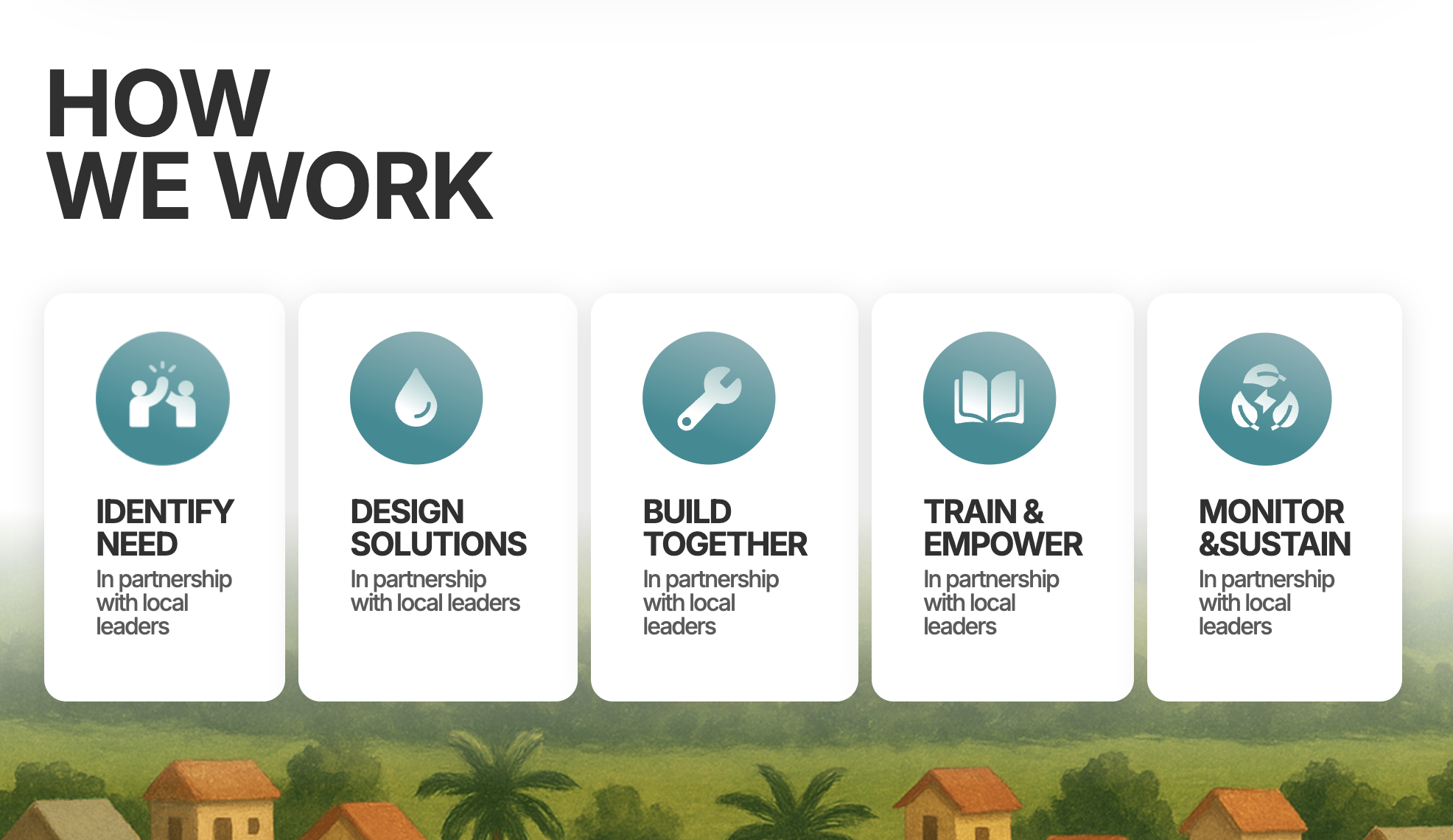
Once a community's strengths are mapped, the next four steps follow, all still in partnership with local leaders:
At Bujaga, that meant a gravity flow scheme built on land the community contributed, with residents providing the labour, and a Water Management Committee trained to collect user fees and keep the tap committees active. More than thirty years later, Vincent is still doing exactly that.
That's the difference between a system built with a community and one built for it. A well drilled for a village, with no one nearby who knows how to fix it, breaks and stays broken. A scheme a community helped build, on land they gave, gets maintained, because it was never anyone else's project to begin with.
When you start from abundance instead of poverty, the whole relationship shifts.
A community isn't a recipient. It's a partner that already has most of what a project needs: skill, labour, leadership, land, and is missing one or two specific pieces, which is where we come in.
That's not charity. That's partnership.
It's also, frankly, why our work lasts. Systems built on a community's own strengths get maintained by that community, because they were never someone else's project to begin with. They were always the community's own.
Every community we work with is already carrying most of what a lasting solution needs. Our five-step process, always in partnership with local leaders, is how we help move the last piece into place.


