.png)
.svg)

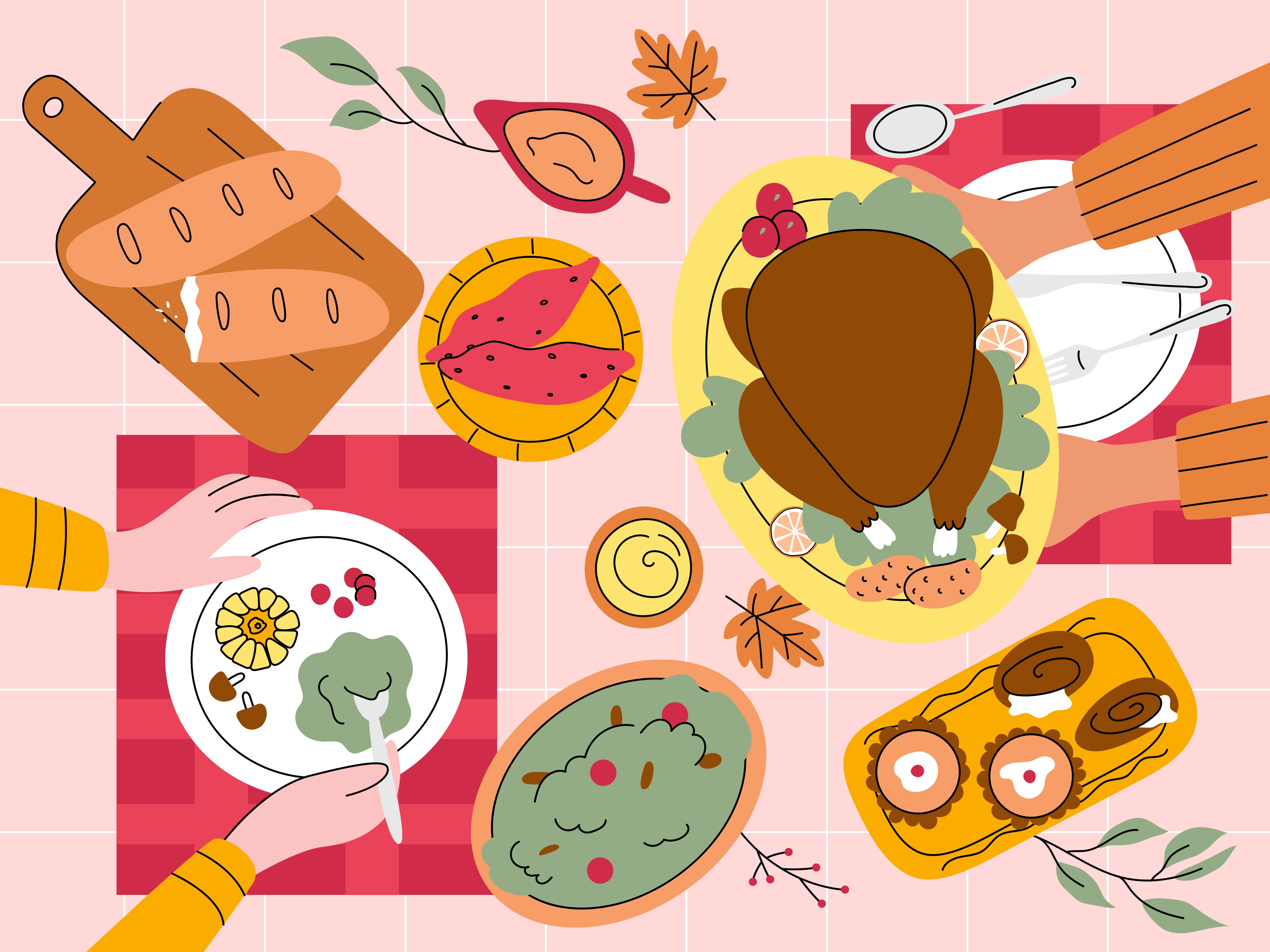
Somewhere in Canada this Thanksgiving, a table is being set.
Plates are passed. Something is in the oven. Someone says thanks before anyone eats.
Now picture a second table. This one is in Kyehunde Village, in Rwampara District, Uganda. There's food on it too. Vegetables. Bananas. Milk. Not because anyone gave it to the family sitting there, but because they grew it themselves.
This isn't a story about scarcity on one side of the world and plenty on the other. It's a story about two full tables, and what it actually took to fill one of them.
Before clean water reached Kyehunde, farming there depended entirely on the rain.
Atwazagye Melidah, a farmer in the village, remembers what that meant in practice: time spent searching for water instead of working the garden, and crops that failed the moment a dry season ran long. Water wasn't just scarce. It was unpredictable, and a farm that depends on unpredictable water is a farm that can't be planned around.
That's a hard way to grow food for a family, let alone sell any of it.
In Atwazagye's own words:
"Today, because water is closer and easily accessible, I am able to grow vegetables, coffee, bananas, and keep livestock throughout the year. My farm production has greatly improved, and I now earn enough income to support my family, pay school fees for my children, and improve our home."
Read that again slowly. Vegetables. Coffee. Bananas. Livestock. Year-round, not just when the rains cooperated.
Water didn't just reach her home. It reached her farm, and her farm turned into something her family could count on.
Atwazagye didn't stop at feeding her own household. With water reliable enough to farm on, she started a small business selling vegetables and milk within the community:
"The gravity flow scheme has also helped me start a small business selling vegetables and milk within the community. This has increased our household income and given us better economic security. We no longer worry as much about drought or spending long hours fetching water."
School fees. Household income. A little more security against the next dry season. None of that was given to her family. It was grown, sold, and reinvested, one harvest at a time.
A full table isn't the opposite of hardship. It's what becomes possible once water stops being the hardest part of the day.
Four hundred kilometres away, in Bwesumbu, Kasese district, that same idea is showing up again, through a different program with the numbers to prove it.
In October 2023, we partnered with the Canadian NGO Thrive for Good to pilot something called Life Gardens: giving households the knowledge, basic tools, and starter seeds to grow disease-fighting foods and medicinal plants at home. A year in, the gardens were thriving, and something had shifted beyond the harvest itself. Families weren't just eating better. They were selling surplus and deciding for themselves what went on the plate.
One community member put it the way we'd put it ourselves if we could:
"With this garden now, we can choose what to eat and when to eat it."
That pilot has since grown into Thrive Gardens, now active across Bwesumbu, and it scales the same way knowledge has always moved through these communities: household to household. Rather than teaching one family at a time, the program trains local Trainers, who then teach their neighbours composting, kitchen garden set-up, and ongoing garden management. That training is now 90% complete in Bwesumbu:
A trainer in Bwesumbu doesn't just grow a healthier garden. They become the person a neighbour asks when the tomatoes won't fruit, or what to plant before the rains come.
The next phase isn't a new rollout. It's follow-up, because a garden that survives one harvest isn't the goal. A garden a family is still tending five years from now is.
This is the same idea behind everything we do, just told through a harvest instead of a tapstand.
We don't hand a community a solved problem. We help move the one piece, water, that was standing between a family and everything they were already capable of growing, earning, and choosing for themselves. In Kyehunde, that meant a farm Atwazagye could finally plan around. In Bwesumbu, it meant a garden and the knowledge to keep it going, passed from one neighbour to the next.
Two villages, two programs, the same shift: once water and the know-how to use it are in place, a family stops waiting and starts choosing.
A table set in Kyehunde, a garden tended in Bwesumbu, and a table set for Thanksgiving in Canada aren't opposites. They're full for the same reason tables are always full: someone had what they needed to grow something, and the patience to let it come in.
This Thanksgiving, we're grateful for all three.
---
Every table like these started with one thing: water close enough, and knowledge close enough, to build a life around.
Donate today to keep tables full beyond Thanksgiving.


